The global economy has shifted rapidly since the start of the year. Global trends include elevated inflation and slowing growth or even contraction in industrial, capex, and retail sectors. Furthermore, some countries are contending with weakening housing markets as central banks hike interest rates and consumers face affordability issues.
The US is working through a hangover stemming from the enormous fiscal and monetary stimulus of the preceding years, but the American consumer is providing a solid foundation for the economy and could help usher it through a relatively mild back side of the business cycle.
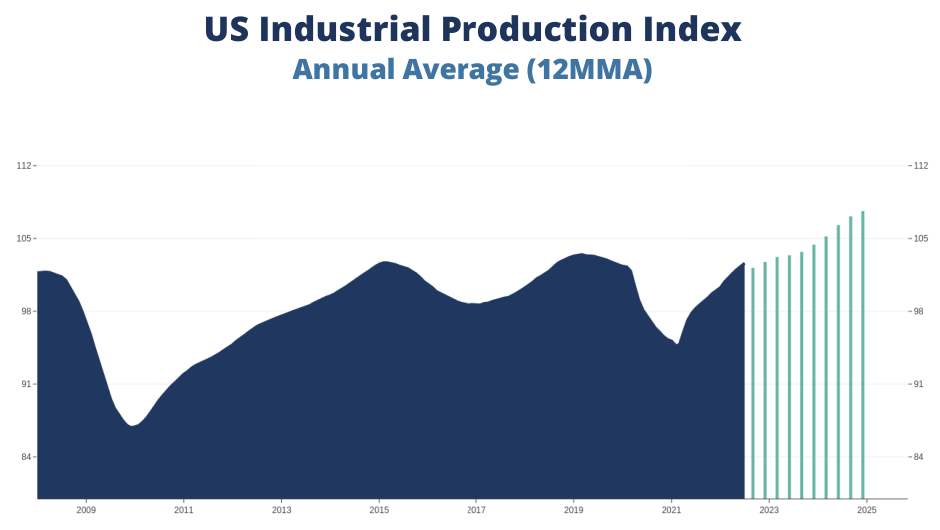
Other countries are not so fortunate and face more severe headwinds. Europe is still contending with war in Ukraine and now faces an energy crisis as it tries to rapidly wean itself away from Russian gas. We downgraded our outlook for European Union Industrial Production and anticipate contraction next year.
China-specific leading indicators show budding upward movement, but that country faces a unique real estate crisis. Large property developers have defaulted on their debt and are unable to complete projects. Further, lockdowns due to China’s zero-COVID policy have disrupted production and increased uncertainty. Across most countries, leading indicators are generally declining, providing insight into the next two to four quarters. However, the back side of the business cycle is not uniform, but will continue to evolve.
In the US, a shift from inflation to disinflation is underway. The US Consumer Price Index in August came in 8.3% higher than in August of 2021. That 8.3% rate of inflation is a decrease from June’s 9.1%, largely due to lower fuel costs. The supply chain has shown sustained improvement (though uneven across markets) from the gridlock of recent years; the Global Supply Chain Pressure Index has declined for four consecutive months, confirming that the relief is real. Additionally, retailers who overordered during COVID-related surges are now marking down excess inventory. These are clear signals that supply-side drivers of inflation are easing. Demand is also softening, taking the form of decline or slowing growth depending on the market.
Monetary policy is the other major factor impacting inflation. The Federal Reserve Board has been very hawkish, stating that it is committed to returning inflation to an average of 2.0%. The Fed is rolling back its balance sheet (i.e., quantitative tightening) and has raised the federal funds rate from the near zero of early this year to 3.00-3.25% as of late September. Based on the Fed’s track record, we are concerned that it may overtighten and adversely impact the business cycle. We are monitoring the 3-month to 10-year yield curve; if we see an extended inversion, it may impact our macroeconomic outlook.
Mortgage rates were around or below 3% for an extended period in 2020-21 and have since more than doubled, coming in at north of 6% at the time of this writing. Between higher borrowing costs and the prior surge in home prices, many would-be homebuyers are now facing affordability issues. This is cooling single-unit residential construction volume; companies operating in this market should plan on cyclical decline into mid-2023. The multi-unit market is benefiting somewhat from the lack of affordable single-family homes.
Elevated interest rates could also hinder businesses capital expenditures. However, built-up backlogs, demand for labor-saving equipment, and reshoring trends will help buoy business-to-business activity. Elevated interest rates could still have a cooling effect, but, per historical precedent, the impact would not be immediate.
What will the future hold? Our analysis suggests a rate-of-change low for the global economy in late 2023 followed by mild cyclical rise in 2024. However, central bank policies, the potential for escalating war, and regional economic problems (including the aforementioned issues in Europe and China) pose risks. At times like these, it takes courage to invest in your business. We encourage you to do so, but focus on high-ROI projects that address the long-term issues of margin squeeze and labor market tightness. Be conservative in your cash flow estimates so you don’t get caught in a tough spot if some of the risks come to fruition.