From an economic perspective, the outbreak of war in the Middle East adds complication, delays, and costs to global supply chains, but the conflict is not expected to shift the business cycle based on its current trajectory. War-related spending would be counted as a positive for GDP, but that economic growth can feel hollow, as it does not directly improve consumers’ economic well-being.
Higher energy costs will be hitting consumers at a time when real income growth is already sluggish, but the impact is somewhat mitigated by efficiency gains in recent decades. Businesses should take a proactive approach to managing their supply chain risks in that region by ordering sooner rather than later and finding backup sources. Expect higher oil prices to flow over to downstream chemicals markets such as plastics and fertilizers in the near term.
Our analysis suggests that similar black-swan type events typically lead to higher prices in the one to two quarters following the onset; however, prices then move back toward economic fundamentals. Even so, the length of the conflict and extent of infrastructure damage will matter. Do not get too caught up in the news. Remember that business cycles in the economy are larger than politics. The momentum for much of the economy is to the upside right now, with the notable exception of some construction markets.
The US economy continues to expand even in the face of headwinds. Consumers remain on relatively solid ground and still have the capacity to borrow to finance spending. Business-to-business spending is recovering, with inflation-adjusted US Nondefense Capital Goods New Orders (excluding aircraft) moving above year-ago levels to close out 2025.
We are anticipating a growth rate peak for much of the macroeconomy late this year, including retail sales, industrial production, and capex spending. However, growth will not be even among industries. Legacy manufacturing markets are likely to lag behind the growth of total US Industrial Production. For example, we recently lowered our expectations for North America Light Vehicle Production due to tariff headwinds, weak income growth, and affordability issues.
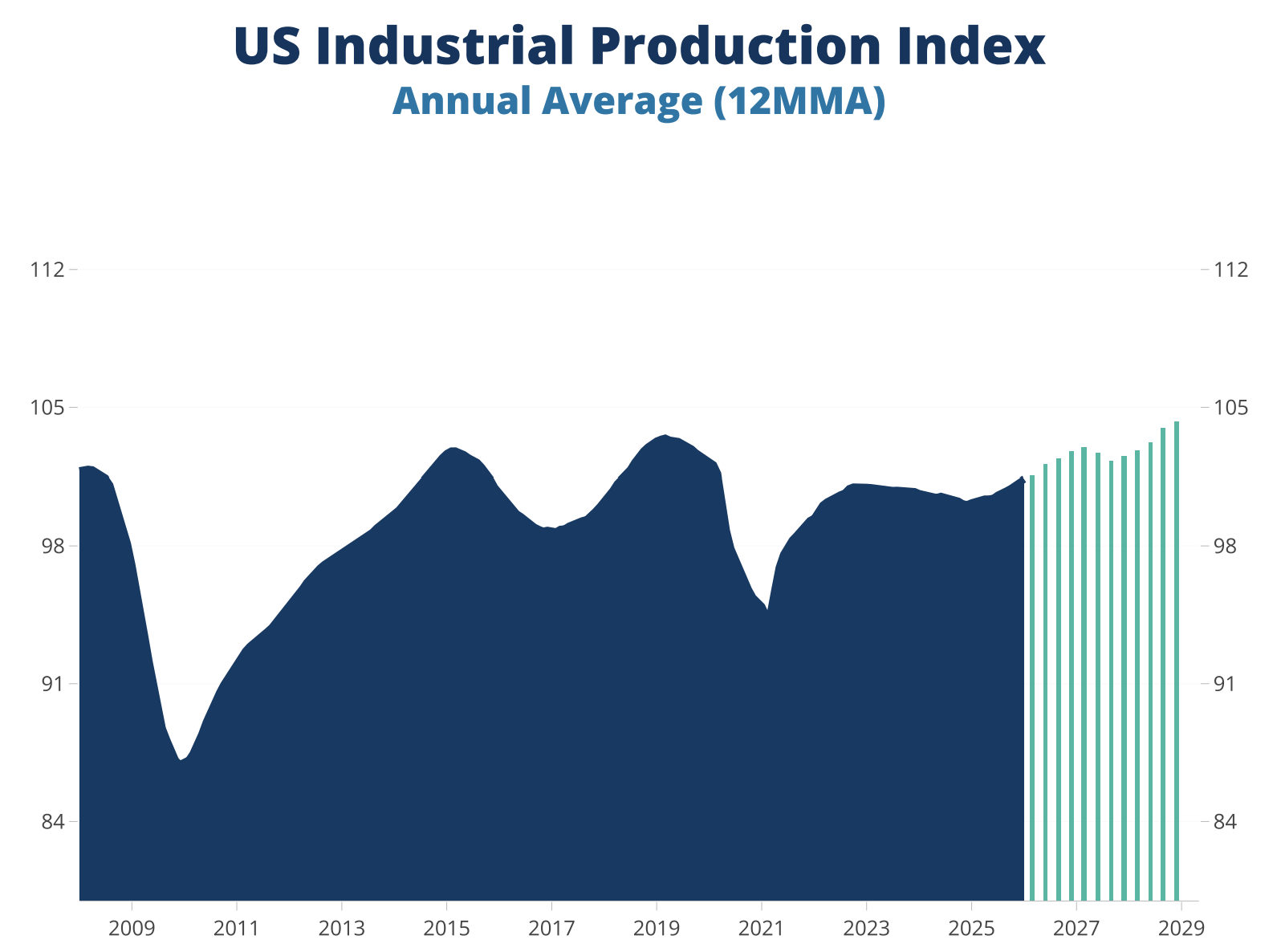
Meanwhile, markets like high tech, defense, and electrical equipment are likely to outperform the broader total, as efforts to modernize domestic manufacturing, invest in electrification, and reduce reliance on imports will drive growth.
Looking beyond this year, many segments of the economy will be heading into slowing growth to start 2027. As you begin to look operationally at the year ahead, ensure your planning accounts for this knowledge and that you are not overbuilding inventory late this year.
The housing market is already signaling a stall, and housing typically leads the industrial sector by roughly one year. While some of the drivers of ongoing US Single-Unit Housing Starts are insular to the new construction industry, sticky interest rates and slowing growth in real incomes will weigh on the industrial sector. The expected stall will be brief, with a rise expected in 2028.
Profitless prosperity remains a risk for many businesses in the coming years. Input costs are generally accelerating, meaning that margin squeeze is likely for businesses with price-sensitive buyers. Higher costs will come from multiple vectors. Electricity, labor, materials, and transportation costs are likely to rise.
Investing in efficiency will be vital to counter this pressure and maximize opportunities in the modest growth environment over the second half of this decade.